
In today’s interconnected world, the conversation around education has evolved beyond access to quality schooling. The real question is whether children are being prepared to thrive in a global environment. Having had the privilege of raising four children across both Ghana and the United States, I have observed firsthand the strengths, gaps, and opportunities that exist within these two systems. These experiences have shaped a firm conviction that Ghana possesses immense potential to build a world-class child development ecosystem if we intentionally blend structure, cultural grounding, and innovation.
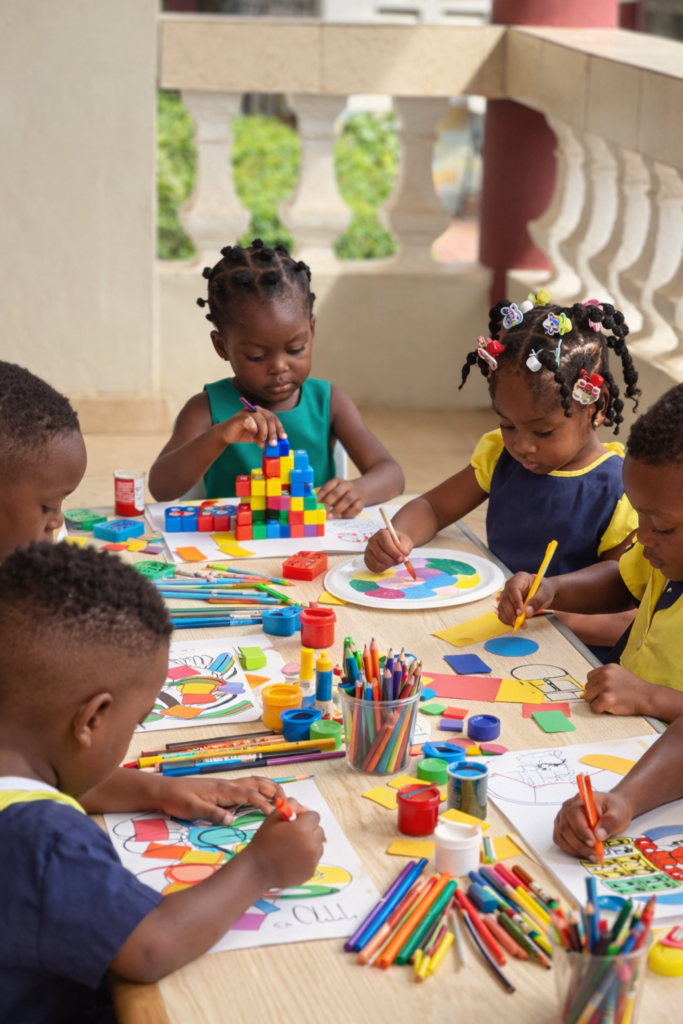
One of the most striking differences between the two systems lies in how early childhood education is approached. In the United States, early learning is structured with a strong emphasis on cognitive development, emotional intelligence, and individualized attention. Children are encouraged to explore, ask questions, and develop confidence from an early age. In Ghana, while discipline and respect are deeply ingrained; values that are both admirable and necessary, early childhood education can sometimes lack the intentional structure and developmental focus needed to fully nurture a child’s potential. From my experience, the first five years of a child’s life play a critical role in shaping not only academic outcomes but also confidence, curiosity, and character.
Equally important is the balance between discipline and creativity. Ghanaian education has long excelled in instilling strong moral values and respect for authority. However, exposure to the U.S. system highlights the importance of also nurturing creativity, critical thinking, and self-expression. Children who are only trained to follow instructions may perform well in structured settings but may struggle in environments that require adaptability and problem-solving. The most well-rounded individuals are those who can think independently, communicate effectively, and respond to change with confidence. Achieving this balance is essential for preparing children for the realities of a rapidly evolving world.
Another critical dimension is parental involvement. One of the notable strengths of the U.S. system is the active role parents play in their children’s education, supported by structured communication, regular progress updates, and clearly defined learning goals. In Ghana, while parents place a high value on education, involvement is often limited by time, systems, or expectations. Yet, one lesson remains universal: education does not end in the classroom. It continues at home, in conversations, in guidance, and in everyday interactions. When parents and educators work in alignment, children benefit from a more consistent and supportive learning environment.
Perhaps the most important lesson from raising children across two continents is the need to develop global citizens who remain deeply rooted in their cultural identity. Exposure to diverse perspectives and global standards equips children with the ability to navigate different environments, while a strong cultural foundation provides them with identity, values, and a sense of belonging. The goal is not to replace one with the other, but to integrate both in a way that prepares children to operate confidently anywhere in the world.
These reflections also underscore the importance of thoughtful leadership in early childhood education. Institutions that draw from both global best practices and local cultural understanding are better positioned to create meaningful and lasting impact. When education is approached with intentionality, grounded in real-world experience and a clear vision for the future, it becomes a powerful tool not just for individual growth, but for national development.
Ghana’s future will ultimately be shaped not only by policy or infrastructure, but by the quality of care, guidance, and education provided to its youngest citizens. From my journey as a parent navigating two different systems, one message stands out clearly: when we invest deliberately in early childhood education, we are not merely educating children, we are shaping the trajectory of generations to come.