
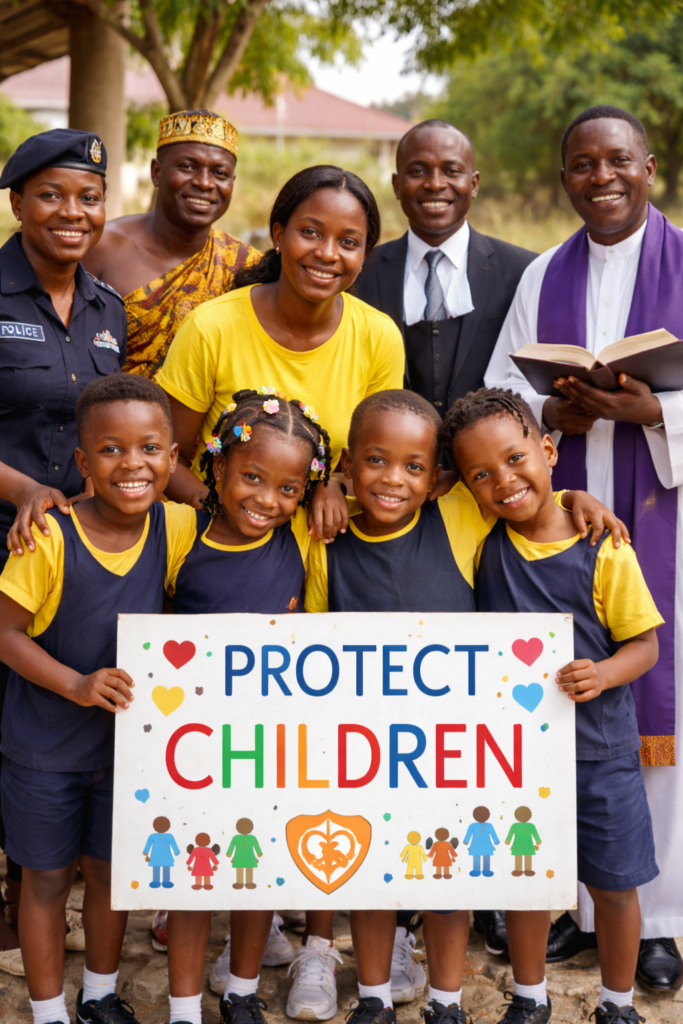
Across Ghana and the African continent, children represent not only the future but the present foundation upon which societies are built. Yet, the protection, dignity, and development of children remain areas that require continued advocacy, awareness, and intentional action. Child rights are not abstract ideals, they are clearly defined legal, moral, and developmental obligations that families, schools, communities, and governments must uphold.
In Ghana, child rights are firmly grounded in law. The 1992 Constitution of Ghana, particularly Article 28, guarantees that every child must be protected from abuse, neglect, discrimination, and harmful labor, while also ensuring access to education, health, and development. Complementing this is the Children’s Act, 1998 (Act 560), which provides a comprehensive legal framework outlining the rights of the child, including the right to life, dignity, education, and protection from exploitation. These laws establish not only the rights of children but also the responsibilities of parents, guardians, and institutions to safeguard those rights.
Beyond national legislation, Ghana is a signatory to key international and regional frameworks that reinforce these protections. The United Nations Convention on the Rights of the Child (CRC) obliges countries to act in the best interests of the child, ensuring rights such as identity, protection from abuse, participation in decisions affecting them, and access to education. Similarly, the African Charter on the Rights and Welfare of the Child (ACRWC) provides a context-specific framework for Africa, emphasizing not only universal rights but also the importance of cultural identity, family structures, and community responsibility.
These frameworks collectively make one point clear: child rights are human rights, and they are non-negotiable.
However, the existence of laws does not automatically translate into protection. In practice, challenges persist. Issues such as child labor, child marriage, neglect, and abuse continue to affect many children, often influenced by socio-economic pressures, cultural practices, and gaps in enforcement. Even though child marriage is prohibited under Ghana’s Children’s Act, cases still arise, highlighting the ongoing need for vigilance and education at the community level.
The gap, therefore, is not always in legislation but in implementation, awareness, and collective responsibility. Studies have shown that effective enforcement of child protection laws requires adequate resources, trained personnel, strong institutional collaboration, and community education. Without these, even the most robust legal frameworks can fall short of their intended impact.
Education plays a central role in advancing child rights. Schools are not merely centers for academic instruction; they are environments where children must feel safe, respected, and empowered. A child who is protected is more likely to learn effectively, express themselves confidently, and develop into a responsible member of society. Conversely, a child exposed to fear, neglect, or abuse carries those effects into adulthood, impacting not only personal outcomes but national development.
Equally important is the role of families and communities. Child protection is not the sole responsibility of the government or schools. Parents, caregivers, religious institutions, and community leaders all have a role to play in ensuring that children grow up in environments that nurture their physical, emotional, and intellectual well-being. This includes creating safe spaces at home, monitoring children’s interactions, promoting positive discipline, and ensuring access to quality education.
A particularly important dimension of child rights in the African context is the balance between cultural values and legal protections. While traditions and customs are an essential part of identity, they must never override the fundamental rights and safety of the child. True cultural preservation lies in adapting practices to align with the dignity and well-being of the next generation.
Ultimately, protecting children is not just a legal obligation, it is a moral imperative and a strategic investment in national development. Countries that prioritize child welfare build stronger, more resilient societies. When children are protected, educated, and empowered, they grow into adults who can contribute meaningfully to economic growth, innovation, and social stability.
The conversation on child rights in Ghana and across Africa must therefore move beyond awareness to intentional action. It requires sustained advocacy, stronger enforcement of laws, continuous education of communities, and leadership that prioritizes the well-being of children in both policy and practice.
In the end, the measure of any society is not only in its economic achievements or infrastructure, but in how well it protects its most vulnerable members. By safeguarding the rights and dignity of every child, Ghana and Africa at large can secure not just a better future but a stronger and more just present.
Protecting the rights of every Ghanaian child requires a united and uncompromising commitment from all facets of society. The Executive must prioritize and enforce robust child protection policies; the Legislature must enact and continually strengthen laws that deter and punish abuse; and the Judiciary must ensure swift and firm justice for offenders to serve as a true deterrent.
The Clergy must use their moral voice to consistently preach and advocate for child protection, while the Chieftaincy institution must uphold justice by refraining from interfering in due process where abuse is concerned. Law enforcement must ensure that cases of child abuse are properly investigated and not inappropriately settled within homes or communities. Above all, every member of society must remain vigilant and intentional in safeguarding the dignity, safety, and rights of every Ghanaian child.